Why static ratings leave capacity on the table
Most overhead lines are operated against a static rating: one maximum current, fixed for the whole year or for a season. That number is set for worst-case weather, with little wind, high temperatures and strong sun. For most hours of the year, the real conditions are far kinder, and the line could safely carry much more than its rating admits. Dynamic Line Rating closes that gap.
A conductor’s limit is set by temperature: it heats up from the current it carries and from the sun, and cools down through wind and the surrounding air. When heating in equals cooling out, you know the maximum safe current. Engineers have used this heat-balance physics for decades, formalised in the CIGRE TB 601 and IEEE 738 standards. Dynamic Line Rating simply solves it continuously, with live weather, instead of once with assumed weather.
Enline’s GridSight® DLR does this for every span of a line, every 15 minutes, using live wind, ambient temperature and solar radiation. It also produces a seven-day forecast, so operators and traders can plan transfer capacity rather than just react to it.
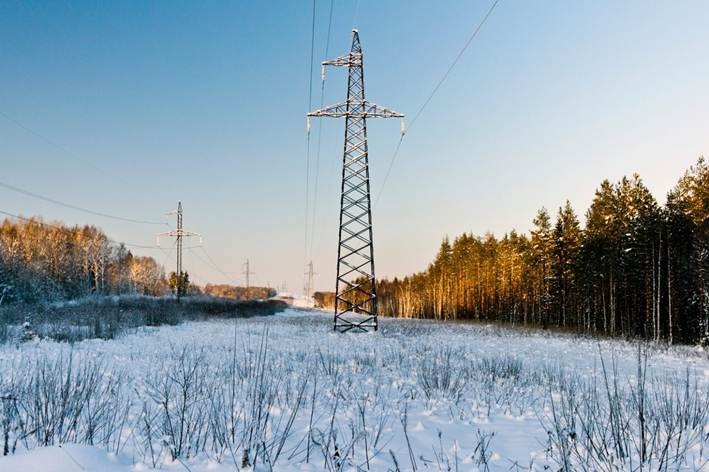
Tracking every span matters because the critical span, the one that limits the whole line, moves with the weather. The gains are around: 20-40% more transfer capacity on existing lines, at lower cost than rebuilding them.
The weakest span moves with the wind. That’s why every span has to be watched.
GridSight® DLR is software-based and leverages data utilities already have, including line design specifications, tower coordinates and weather data. Sensors are optional, not a prerequisite, they can be used to further refine the model or as a strategic tool for specific lines, without limiting deployment across the wider network. For Lithuania’s transmission operator, that hidden capacity is what makes room for more renewables, faster.
When the model does the rating and the sensors do the verifying, a national rollout stops being a hardware project and becomes a software decision.
Lithuania: setting the pace in DLR for a more flexible grid
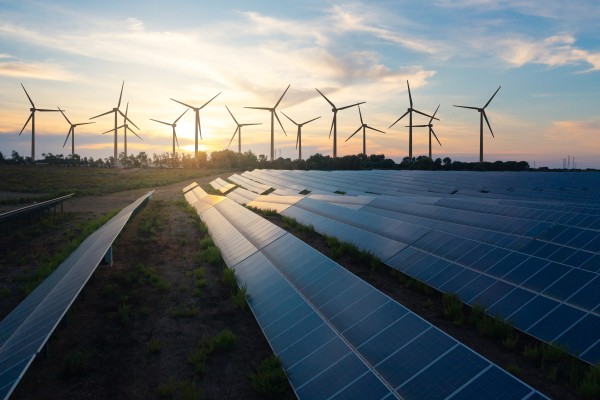
Lithuania aims to double both, electricity demand and renewable generation within a decade. Installed wind and solar capacity has already reached 6 GW, more than 60% of the country’s total generation capacity, and it is expected to grow towards around 10 GW. That pace puts the transmission grid under real pressure.
Building new lines is slow so the challenge is to integrate more renewables on the infrastructure already in service. Here, static and seasonal ratings become a bottleneck. Because they are necessarily conservative, they can hold power flows well below what the lines could safely carry under actual and forecast conditions.
Litgrid the national transmission system operator, has to absorb far more variable wind and solar, without compromising thermal capacity or electrical stability. The project covers 38 lines across its network i.e 1,100 km at 110 kV and 330 kV.
GridSight® DLR across all 38 lines
Enline in partnership with Energiot, is supporting Litgrid in deploying Dynamic Line Rating across its national transmission network. Enline´s GridSight® Multiphysics Digital Twin assesses and forecasts available transmission capacity across all 38 lines, while strategically deployed sensors provide field measurements to calibrate and continuously refine the model.
The model carries the deployment, the sensors check it
- Enline’s GridSight® digital twin combines physics-based algorithms with asset information, grid data, geospatial intelligence and hyperlocal weather forecasts. It estimates and forecasts ampacity across the network, on lines with sensors and on lines without them.
- Energiot’s self-powered, conductor-mounted sensors are installed on a number of selected lines (13), where they measure conductor temperature, sag and ground clearance. They act as a reference to validate and calibrate Enline´s model, not as a requirement to rate a line.
Strategically positioned sensors provide reference data to feed the model. And Enline's digital twin rates every span on every line, and forecasts how conditions, and therefore capacity, will change ahead of time.
The result is “network-wide” visibility of essential information such as: current and forecast ampacity, conductor temperature, sag and clearance, bringing real value to day-ahead, intraday and real-time operations.
Earlier pilots reveal on average 50% more capacity than the lines’ design rating
The pilots also shaped Litgrid’s ground breaking decision in this initiative.
As Donatas Matelionis Head of Power System Operations at Litgrid puts it: “Dynamic Line Rating technology, under suitable environmental conditions, makes it possible to increase line capacity, allowing more electricity to flow through them. […] We are pleased that, in reaching our investment decision, we were able to draw on the results of completed pilot trials.”
From thermal headroom to usable capacity
Extra capacity only counts if the whole grid can safely use it.
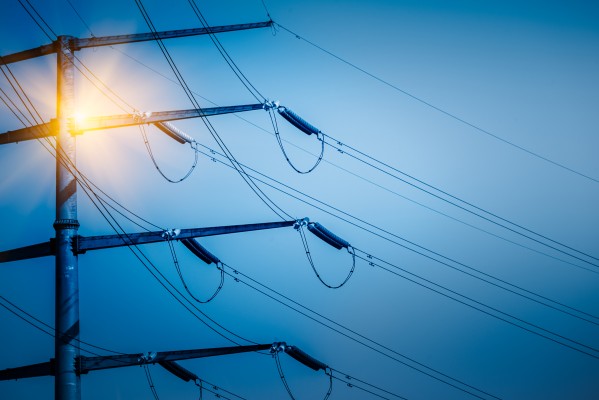
Knowing that a line can carry more is only half the answer. Any additional power flow must also stay compatible with the electrical limits and secure operation of the wider grid. Pushing more current through one corridor can create voltage, current or other constraints somewhere else. That is why Enline’s approach goes beyond an isolated line rating. GridSight® combines DLR with Network State Estimation to provide the full picture.
- Dynamic Line Rating identifies the capacity each line can carry under current and forecast conditions.
- Network State Estimation provides visibility of voltage, current and other operational variables across the grid.
Together, they turn a thermal opportunity into capacity that Litgrid can base their decision making on for operational use. Every extra ampere is checked against equipment limits and N-1 security, so more headroom never comes at the expense of a secure system. The result is a more efficient use of existing infrastructure, less transmission congestion and a reduced need for costly grid upgrades or expansion.
What Litgrid gains, and what comes next
The deployment is designed to make Litgrid’s transmission system more adaptive and flexible, delivering four key benefits:
- Greater visibility of available transmission capacity across the monitored network.
- Better anticipation of thermal headroom, identifying periods when lines can safely carry more or need closer operational attention.
- More efficient renewable integration, helping reduce avoidable curtailment and make better use of existing infrastructure.
- More informed operational decisions across day-ahead, intraday and near-real-time timeframes.
A step toward a more digital grid
What Lithuania is doing today, every European TSO will face tomorrow.
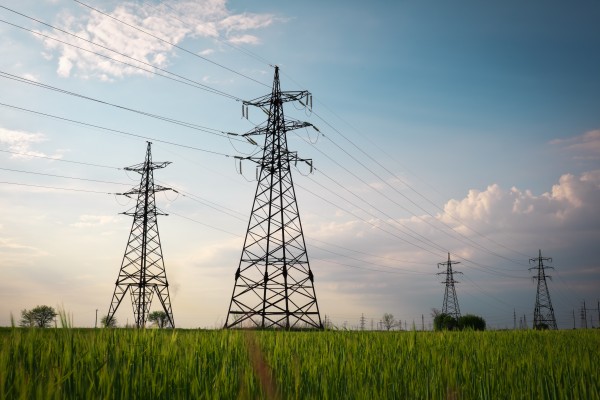
Litgrid’s project goes beyond deploying Dynamic Line Rating. It marks a broader step towards a smarter, more data-driven transmission system, bringing digital technologies and real-time intelligence into everyday grid operations and decision-making.
It is also a milestone for Enline: a deployment at national scale, within a European TSO with unified system management and grid operation. And it reflects the strategic weight of the Baltic region in Europe’s energy landscape, both for the energy transition and from a geopolitical perspective.
Want to explore further?
Discover how Dynamic Line Rating can unlock greater grid capacity and flexibility, even at the distribution level, in our latest deep dive: Dynamic Line Rating at the Distribution Edge.
Stay connected with Enline and the future of smarter grids:
- Follow us on LinkedIn for insights, projects and updates.
- Subscribe to Inside the Grid, our newsletter exploring the technologies, challenges and opportunities shaping tomorrow's power grids.