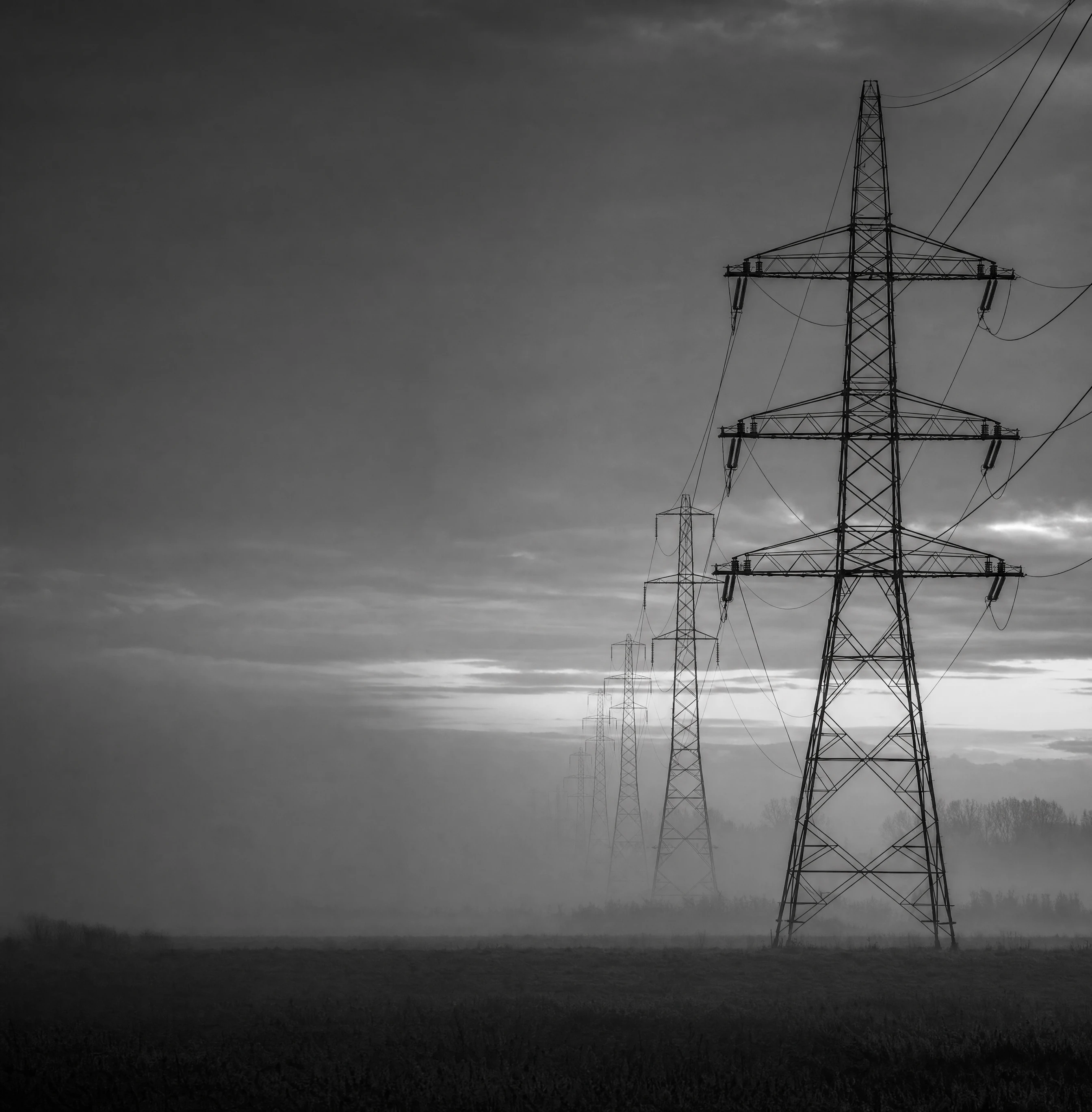
Every span, on its own.
The critical span moves with the weather. GridSight® tracks it in real time, instead of assuming it's fixed where a sensor happens to sit.
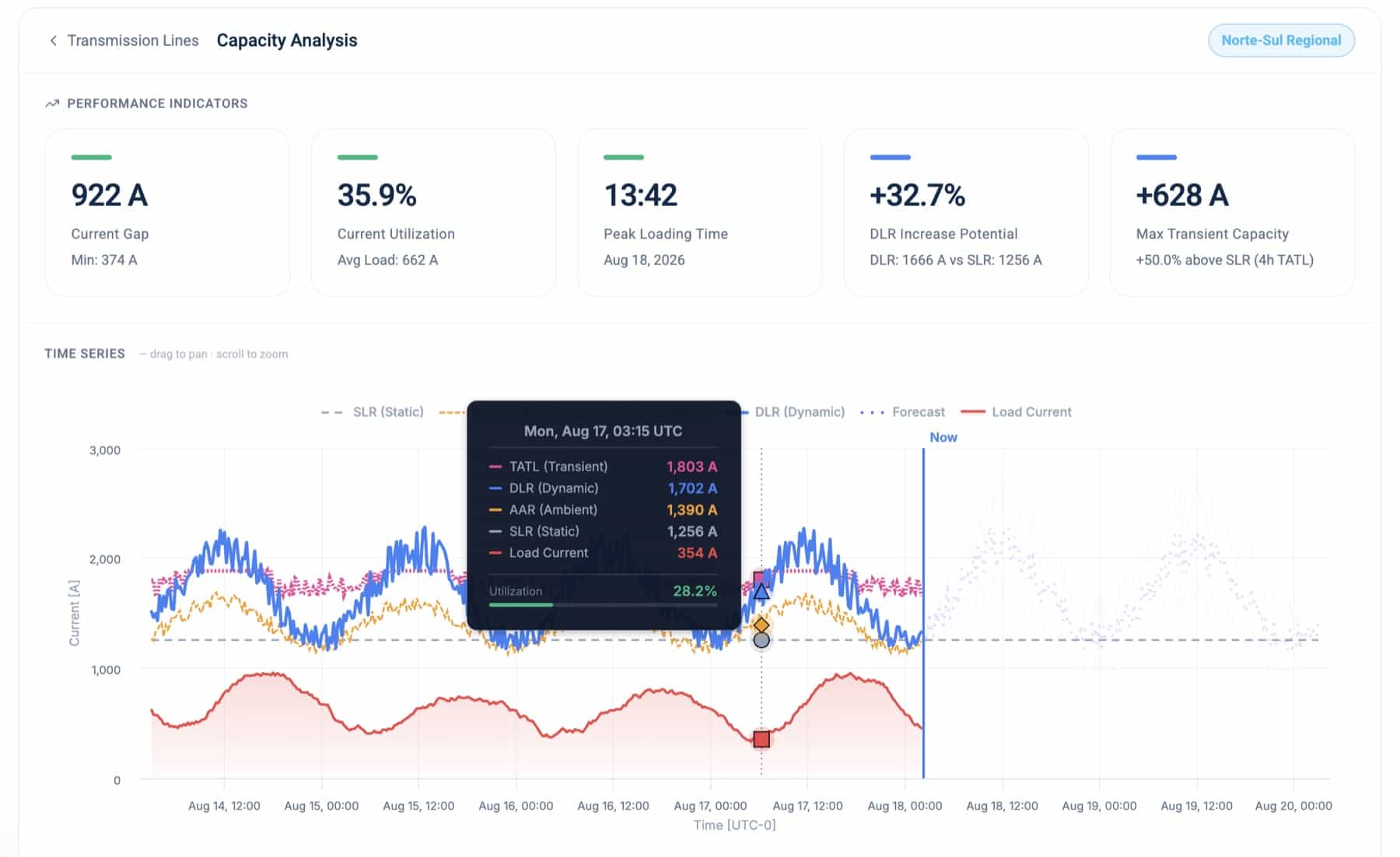
Transform real-time weather data into more transmission capacity, greater efficiency, and a more resilient grid. GridSight® DLR updates the actual safe capacity every 15 minutes, turning unused capacity into power you can dispatch today.
GridSight® DLR .
Recalculated every 15 minutes.
GridSight® DLR is Enline's real-time thermal rating engine. Every 15 minutes, it solves the heat balance for every span, not only the ones with a sensor, using live wind, ambient temperature and solar radiation.
The output is simple: the maximum safe current each span can carry, right now, plus a seven-day forecast so operations and trading can plan transfer capacity around it, not just react to it.
For TSOs, that means more usable capacity on the corridors that matter, more headroom for N-1 contingency management, and no new construction permit to wait for. It runs entirely on data utilities already have: line design specs, tower coordinates, and weather. No outage. No field crew. No new hardware to maintain.
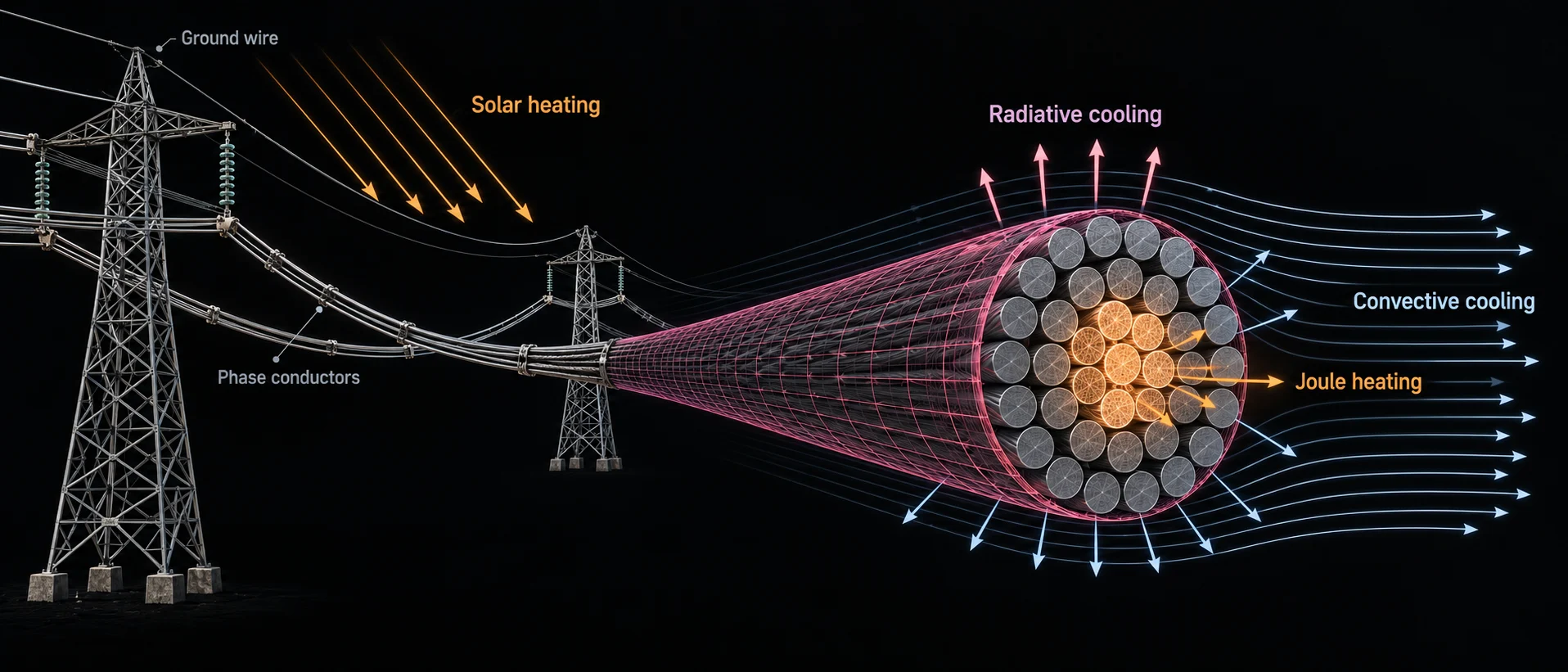
Heating in = Cooling out → safe operating current
Nothing to install. Nothing to wait for.
Most DLR projects start with a hardware quote, a field survey, and a 3–6 month installation window before you see a single rating. GridSight® DLR starts with the line data you already have and delivers a rating in weeks. Sensors optional.
The critical span moves with the weather. GridSight® tracks it in real time, instead of assuming it's fixed where a sensor happens to sit.
Physics and live weather data replace hardware. Sensors are optional to refine the model, never a pre-requisite to start.
Every extra ampere is checked against equipment limits and N-1 security, through the built-in Dynamic Security Assessment.
The same model that rates your lines feeds conductor sag into GridSight® VGM's clearance calculations.
Real corridors. Real gains.
GridSight® DLR has been validated in real-world deployments across four continents, with digital models tested against actual grid conditions.
Technical Depth. Sector Expertise.
Built by power systems engineers with decades of grid experience, we combine energy-domain expertise with the scientific and digital capabilities needed to reinvent grid operations.
Enline is a team of 55+ engineers, scientists, data experts, and industry specialists. We build technology that helps grid operators unlock more capacity from the infrastructure they already have.