Article
Mar 12, 2026
AI-Powered Digital Twin Frameworks for Smart Grid Optimization
Learn how AI-powered Digital Twin Technology optimizes Smart Grids, unlocks hidden capacity, reduces congestion, and accelerates renewable energy integration.
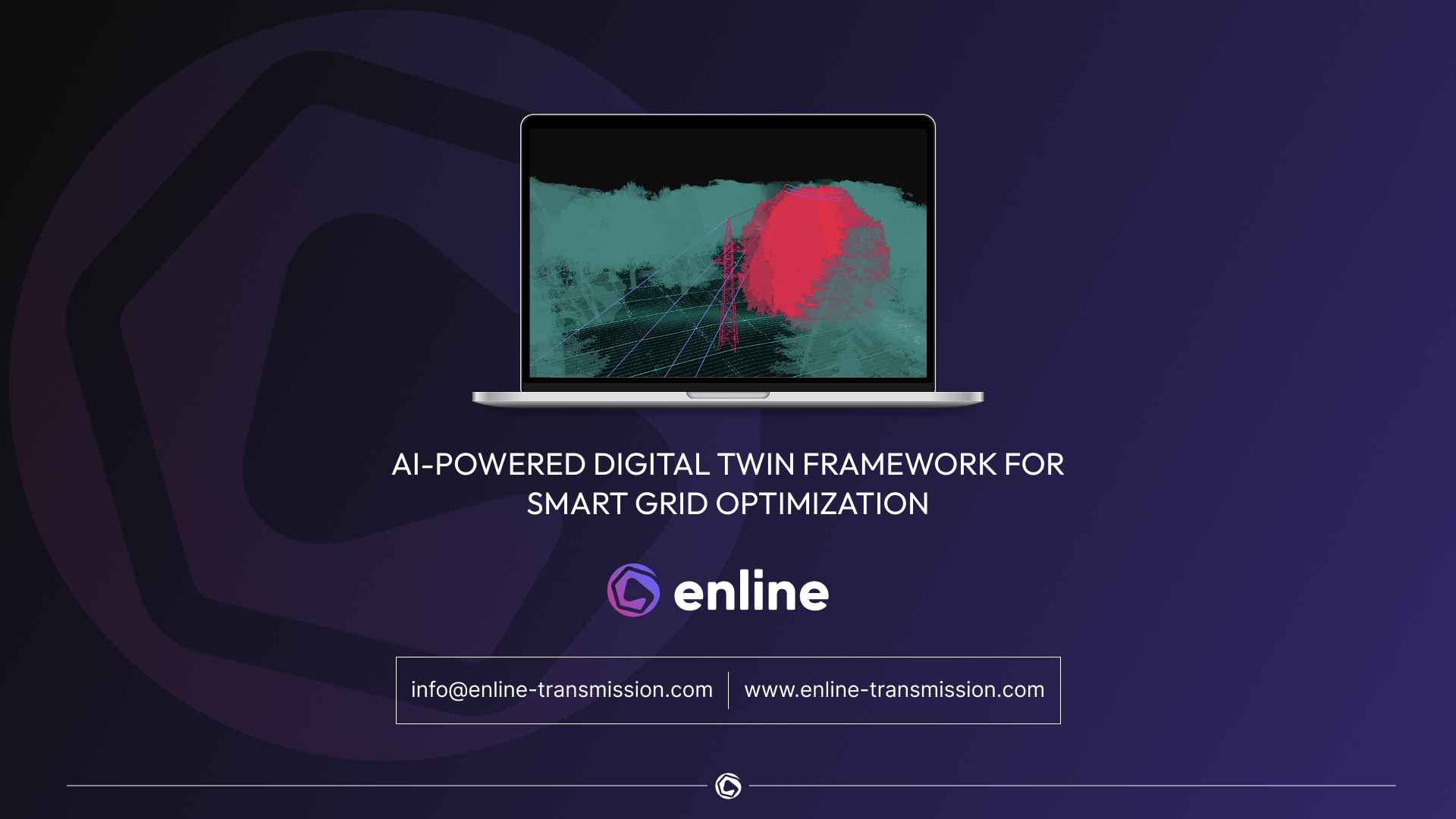
How does an AI-powered Digital Twin Technology transform modern Smart Grids?
You see, the global electricity sector is entering a new era where digital intelligence is as important as physical infrastructure.
Utilities, renewable developers, and grid operators are facing increasing pressure to integrate renewable energy, improve reliability, reduce congestion, and operate aging networks more efficiently.
Traditional grid management tools are no longer enough to handle the complexity of modern Smart Grids. This is where AI-powered Digital Twin Technology is becoming the core platform for next-generation grid optimization.
A digital twin creates a high-fidelity virtual replica of the power system, allowing operators to simulate, predict, and optimize grid behavior before making real-world decisions. With the addition of artificial intelligence, these models can continuously learn from real-time data and automatically suggest the best operational strategy.
Modern grid intelligence platforms use digital twins to simulate grid connections, optimize capacity, predict congestion, and improve system stability before physical changes are made. This approach reduces risk, lowers costs, and accelerates renewable integration by enabling safe, data-driven decision making.
In this article, we explore how AI-powered Digital Twin Technology is being used to optimize Smart Grids, the key challenges it solves, and how advanced digital twin platforms such as those developed by Enline are enabling utilities, TSOs, DSOs, and renewable developers to unlock hidden grid capacity.
Key Challenges of Smart Grids
Smart grids are designed to be flexible, digital, and capable of integrating large amounts of renewable energy. However, in practice, most power systems still face structural and operational limitations that prevent them from operating efficiently.
Increasing grid complexity
Modern grids must manage distributed generation, electric vehicles, storage systems, and variable renewable energy sources. This creates thousands of possible operating conditions that cannot be analyzed manually.
Power systems often operate close to stability limits because demand grows faster than transmission expansion. When networks are overloaded or poorly monitored, voltage instability and system collapse can occur.
Lack of real-time visibility
Many utilities still rely on incomplete monitoring systems, outdated SCADA infrastructure, or static planning models. Without full visibility, operators cannot predict failures or optimize power flow.
In some grids, limited monitoring prevents operators from seeing the true state of the network, making it difficult to respond to disturbances and increasing the risk of outages.
Aging infrastructure and limited capacity
Building new transmission lines is expensive, slow, and often restricted by environmental or regulatory constraints. As a result, many networks operate near their thermal and stability limits.
Electricity shortages, aging infrastructure, and underinvestment in grid expansion have caused major reliability issues in several countries, showing that improving grid intelligence is as important as building new assets.
Renewable integration challenges
Wind and solar generation are variable and difficult to forecast. Without advanced modeling, operators must curtail renewable energy to maintain stability.
Grid optimization now requires predictive tools that can simulate weather conditions, load changes, and equipment limits in real time.
Digital Twin Technology for Smart Grid
The Digital Twin Technology for Smart Grid is a virtual model of the electrical network that reproduces the physical behavior of lines, transformers, substations, and generation assets.
Unlike traditional planning models, a digital twin is continuously updated using real-time data, weather inputs, and operational measurements. This allows operators to simulate future scenarios with high accuracy.
Digital twins enable utilities to test grid conditions, evaluate connection requests, and analyze contingencies without affecting the real system. This reduces operational risk and improves planning efficiency.
High-fidelity digital twin models allow engineers to stress-test grid connections, simulate congestion scenarios, and optimize asset utilization before implementation.
Benefits of Digital Twin Technology for Smart Grids
Digital twin platforms are becoming the core technology behind modern Smart Grids because they allow operators to understand, predict, and optimize grid behavior in real time. Unlike traditional planning tools, AI-powered digital twins create a living model of the network that continuously updates using operational data, weather conditions, and system measurements.
Below are the key benefits of Digital Twin Technology for Smart Grids and why utilities, TSOs, DSOs, and renewable developers are adopting this approach.
1. Real-time grid visibility
One of the biggest challenges in modern Smart Grids is the lack of full visibility across the network. Many power systems still operate with incomplete monitoring, limited SCADA coverage, or outdated models that do not reflect real operating conditions.
Digital twin technology solves this problem by creating a synchronized virtual model of the grid that mirrors the real system at every moment. Operators can see line loading, voltage levels, congestion risks, and stability margins in real time.
With high-fidelity digital twin platforms such as those developed by Enline, utilities can achieve full grid visibility across transmission, distribution, and renewable connections, enabling faster and more accurate operational decisions.
Real-time visibility reduces uncertainty, improves reliability, and allows operators to manage the grid closer to its true limits without compromising safety.
2. Predictive stability analysis
Modern Smart Grids operate under constantly changing conditions due to renewable generation, demand fluctuations, and network constraints. Because of this, stability analysis must move from reactive to predictive.
AI-powered digital twins allow operators to simulate future scenarios before they happen. The system can analyze thousands of possible operating conditions and identify risks such as overload, voltage instability, or frequency deviations.
Predictive stability analysis makes it possible to prevent outages instead of reacting to them.
3. Capacity optimization
One of the most important advantages of Digital Twin Technology for Smart Grids is the ability to use existing infrastructure more efficiently.
Most transmission and distribution networks are operated with conservative limits because operators do not have enough information about real conditions. This leads to unused capacity, congestion, and unnecessary investment in new lines.
Digital twins allow operators to calculate the true operating limits of the grid based on real weather data, actual loading, and network configuration.
With AI-powered optimization tools, utilities can safely increase line capacity, reduce curtailment, and defer expensive infrastructure upgrades.
Capacity optimization is one of the main reasons why digital twin technology is becoming essential for modern Smart Grids.
4. Renewable integration planning
The growth of renewable energy is one of the main drivers behind the adoption of digital twin technology.
Wind and solar generation are variable and difficult to predict. Without advanced modeling tools, grid operators must limit renewable connections or curtail production to maintain stability.
Digital twin platforms allow operators and developers to simulate renewable integration before the project is built. They can evaluate hosting capacity, connection feasibility, congestion risks, and curtailment scenarios using real grid models.
This makes project planning faster, safer, and more accurate.
With advanced digital twin solutions like Enline grid connection and curtailment analysis tools, developers can optimize the location, size, and configuration of renewable plants while ensuring compliance with grid requirements.
This reduces project risk and accelerates the energy transition.
5. Risk-free simulation
One of the biggest advantages of digital twin technology is the ability to test grid scenarios without affecting the real system.
In traditional grid operation, changes must be implemented carefully because mistakes can cause outages or equipment damage. Digital twins eliminate this risk by allowing operators to simulate any scenario in a virtual environment.
Operators can test:
New connections
Network upgrades
Dispatch strategies
Emergency situations
Protection settings
Market conditions
All simulations are performed in the digital twin before applying changes to the physical grid.
This risk-free environment improves decision making and allows utilities to adopt new strategies with confidence.
Digital twin platforms developed by Enline provide high-accuracy simulation environments where grid operators can stress-test the network under extreme conditions without compromising system security..
Why AI is Essential for Modern Smart Grids
Modern Smart Grids generate massive amounts of data from sensors, SCADA systems, renewable plants, weather inputs, and market signals. Without artificial intelligence, this data cannot be processed fast enough to support real-time decision making, which limits the ability of operators to manage the grid efficiently.
AI allows digital twin platforms to analyze large volumes of data in real time and turn them into useful insights. Instead of only showing the current state of the network, AI can detect patterns, predict future conditions, and recommend the best operating strategy.
Artificial intelligence makes digital twins adaptive, predictive, and scalable. The model can update continuously using real-time data, simulate multiple scenarios, and identify risks such as congestion, overload, or instability before they occur.
Application of Digital Twins Technology in Smart Grids
Digital twins are already being used across the entire electricity value chain.
Transmission system optimization
TSOs use digital twins to maximize line capacity, improve stability, and plan expansions.
Applications include:
Dynamic Line Rating
Power flow optimization
Stability analysis
Expansion planning
Contingency simulation
AI-based transmission modeling allows operators to unlock hidden capacity and operate the network closer to its real limits.
Renewable project grid connection
Developers use digital twins to evaluate grid connection feasibility and reduce project risk.
Typical use cases:
Hosting capacity analysis
Connection feasibility studies
Curtailment prediction
Revenue optimization
Hybrid system modeling
Digital twin simulations help optimize grid connections and ensure regulatory compliance before construction.
Distribution grid management
DSOs use digital twins to manage distributed energy resources, EV charging, and local congestion.
Applications include:
Load forecasting
Voltage control
DER integration
Network reinforcement planning
Market and dispatch optimization
Digital twins can simulate market scenarios, generation dispatch, and grid availability.
This helps operators maximize revenue and reduce risk.
AI-Powered Digital Twin Frameworks for Smart Grid Optimization
An effective AI-powered digital twin framework for smart grids typically includes several layers.
Data integration layer
SCADA data
Weather data
Asset monitoring
Market data
GIS data
The more data the twin receives, the more accurate the simulation.
Grid model layer
This layer contains the high-fidelity electrical model.
It includes:
Transmission lines
Transformers
Generators
Loads
Protection systems
AI and analytics layer
This layer performs:
Forecasting
Optimization
Pattern recognition
Risk analysis
Predictive maintenance
AI transforms the digital twin from a passive model into an intelligent system.
Simulation and optimization engine
This engine runs thousands of scenarios to find the best operating point.
It enables:
Capacity optimization
Curtailment reduction
Stability improvement
Investment planning
Decision support layer
Operators receive recommendations instead of raw data.
This improves decision speed and reduces human error.
Why AI-powered Digital Twin Technology is Critical for Renewable Energy Growth
The global energy transition depends on smarter and more flexible power grids. Renewable energy sources such as wind and solar are growing rapidly, but most existing networks were not designed to handle variable generation, distributed resources, and bidirectional power flow. Because of this, grid operators are facing new technical challenges that cannot be solved with traditional planning tools.
AI-powered Digital Twin Technology provides the intelligence needed to operate modern Smart Grids efficiently. By creating a real-time virtual model of the network, digital twins allow operators to simulate, predict, and optimize grid behavior before making physical changes. This makes it possible to integrate more renewable energy while maintaining reliability and stability.
Without digital intelligence, renewable integration will continue to be limited by several critical constraints.
Congestion
One of the main barriers to renewable energy growth is grid congestion. In many regions, transmission lines reach their limits even when renewable generation is available. Because operators must follow conservative ratings, a large amount of clean energy is often curtailed even though the physical infrastructure could carry more power.
AI-powered digital twins help solve congestion by calculating the true capacity of the network using real-time data, weather conditions, and system measurements. Instead of relying on static limits, operators can safely increase line utilization and reduce curtailment.
Solutions such as Enline Dynamic Line Rating allow utilities to unlock hidden capacity in existing lines. This makes it possible to connect more renewable projects without waiting for new transmission infrastructure, which can take years to build.
Stability constraints
Renewable generation introduces variability that makes grid stability more difficult to maintain. Changes in wind speed, solar radiation, and demand can affect voltage, frequency, and power flow across the network. Without accurate modeling, operators must limit renewable penetration to avoid instability.
Digital twin technology allows operators to simulate thousands of operating conditions and identify stability risks before they occur. AI algorithms can predict how the grid will behave under different scenarios and recommend the safest operating point.
Connection delays
Grid connection studies have become one of the biggest bottlenecks in renewable energy deployment. Developers often wait months or years for connection approvals because utilities must analyze complex network conditions manually. As the number of renewable projects increases, this process becomes slower and more difficult.
AI-powered digital twin technology accelerates connection studies by using accurate grid models and automated simulations. Operators can evaluate multiple scenarios quickly and determine whether the network can support a new project without compromising reliability.
Planning uncertainty
Planning future grid expansions has become more complex because renewable generation, demand growth, and market conditions are constantly changing. Traditional planning methods rely on fixed assumptions that may not reflect real operating conditions, which increases the risk of incorrect investment decisions.
Digital twins reduce planning uncertainty by allowing operators to test different scenarios in a virtual environment. Utilities can simulate future load growth, renewable penetration, and network upgrades before committing to expensive infrastructure projects.
This approach makes grid planning more reliable and more cost effective. Instead of building new lines for every new project, operators can use digital twin simulations to optimize the existing network and invest only where it is truly necessary.
Platforms like Enline Digital Twin and predictive grid modeling tools provide the level of accuracy needed to support long-term planning while reducing technical and financial risk
Smarter grids enable the energy transition
Digital twins allow utilities to use existing infrastructure more efficiently instead of building new lines for every renewable project. This is critical because transmission expansion is slow, expensive, and often limited by regulatory or environmental constraints.
By combining artificial intelligence with high-fidelity grid models, operators can increase capacity, improve stability, and connect more renewable energy without compromising safety.
Innovation in grid technology, business models, and digital platforms is essential for enabling sustainable energy systems and supporting economic development. AI-powered Digital Twin Technology is becoming the foundation that makes this transformation possible.
How Enline Digital Twin Technology Enables Grid Intelligence
Enline digital twin platforms are designed to provide full grid visibility, predictive modeling, and AI-based optimization for transmission, distribution, and renewable projects.
Key capabilities include:
High-fidelity digital twin modeling
AI-based capacity optimization
Predictive grid availability
Curtailment analysis
Dynamic line rating
Connection feasibility simulation
Dispatch optimization
These tools allow operators to unlock unused capacity, reduce congestion, and make faster decisions with lower risk.
By combining AI with digital twin technology, Enline enables utilities and developers to transform the grid from a static network into a fully intelligent system.
Conclusion
AI-powered Digital Twin Technology is becoming the foundation of modern Smart Grids. As power systems grow more complex, traditional planning and monitoring tools are no longer enough.
Digital twins provide real-time visibility, predictive intelligence, and risk-free simulation, while artificial intelligence makes these models adaptive and scalable.
Together, they allow grid operators to optimize capacity, integrate renewables faster, and operate networks safely at higher efficiency.
For utilities, TSOs, DSOs, and renewable developers, adopting AI-powered digital twin frameworks is no longer optional. It is the key to building the intelligent, flexible, and reliable power systems required for the energy transition.