Article
Feb 13, 2026
Digital Twin Technology for Power Grids
Digital Twin Technology for power grids that delivers 100% line visibility, 7-day forecasting, and 50% more capacity. Built for TSOs and DSOs.
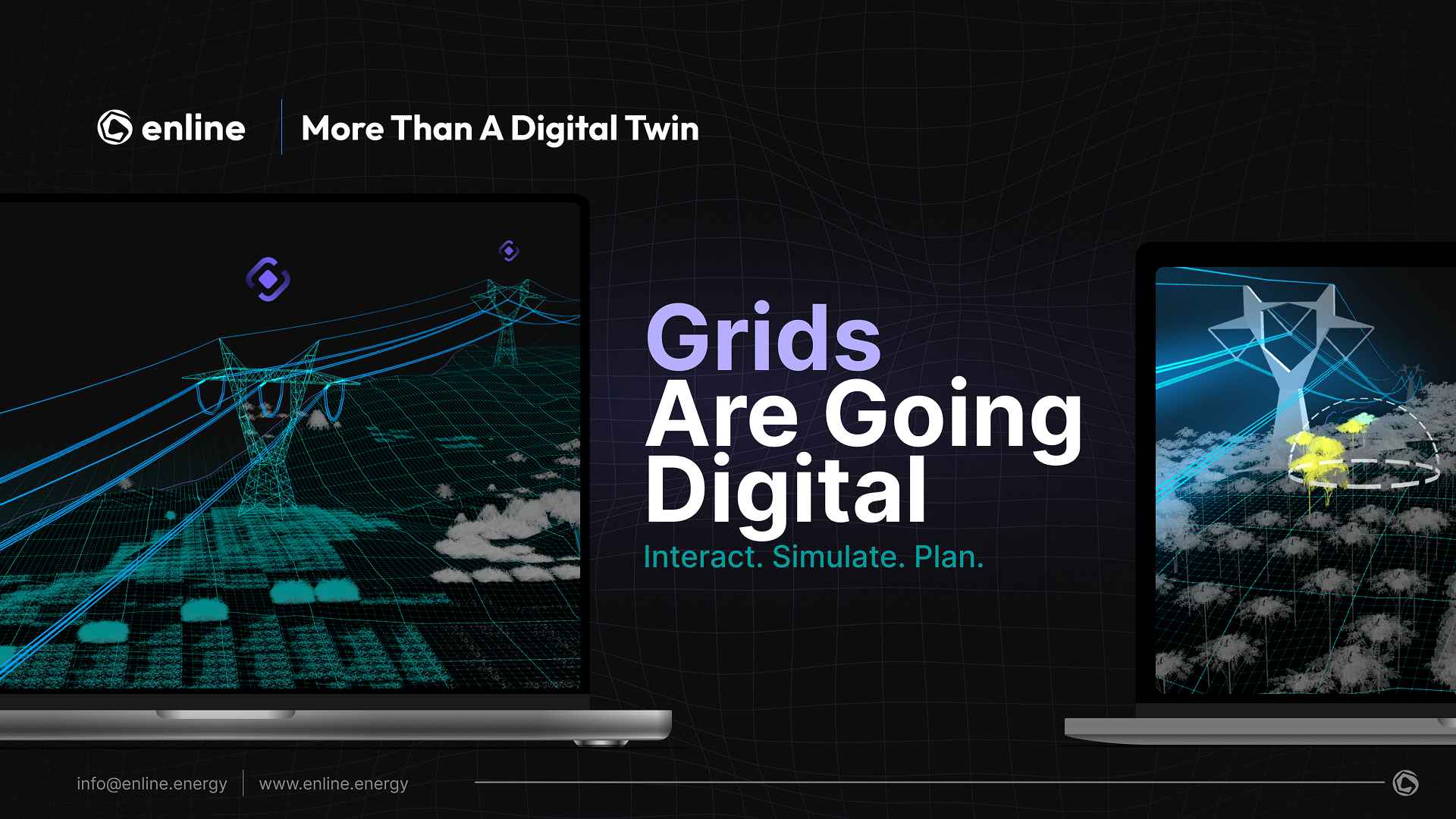
Digital Twin Technology is changing everything. Electricity powers our world. Hospitals. Airports. Data centers, factories, transport systems, and smart cities depend on it.
Yet today’s power grid is under more pressure than ever before.
Renewable generation is growing fast. Electrification is accelerating. Weather is becoming extreme and infrastructure is aging. Grid congestion is blocking clean energy projects. Transmission system operators face a difficult reality.
They must increase capacity, reduce outages, accelerate renewable integration and reduce cost.
And they must do all this without waiting ten years to build new transmission lines.
This is where Digital Twin Technology changes everything. Enline is transforming power systems into intelligent grids using AI-driven, physics-based Digital Twin technology. This is not a dashboard. It is not visualization software.
It is real operational intelligence that increases capacity by up to 50 percent and reduces outage risk by up to 40 percent.
It also delivers:
• 100 percent transmission line visibility
• 7-day conductor performance forecasting
• 10-day grid capacity prediction
• 25 percent reduction in operational expenditure
• 10x faster inspection processes
Let us explore how.
What is Digital Twin?
A digital twin is a continuously evolving, physics-informed virtual replica of a physical asset, system, or infrastructure that integrates real-time operational data, historical performance records, and environmental variables to simulate, monitor, and predict real-world behavior across its entire lifecycle.
In the power sector, a digital twin means building a precise virtual model of a transmission line, substation, or full grid corridor that behaves exactly like the real infrastructure.
This model evolves over time. If temperature rises, the Digital Twin calculates new conductor temperature.
If wind increases, it recalculates cooling effects. If load changes, it updates thermal behavior instantly. If maintenance occurs, the model adapts.
The Digital Twin mirrors reality. But more importantly, it predicts what will happen next. That predictive capability is what makes it powerful.
Enline’s Digital Twin unifies structural, electrical, and historical grid intelligence into one computational model.
It integrates detailed infrastructure data such as tower positioning, terrain topology, conductor specifications, and structural design parameters. It combines this with live electrical inputs from substations, existing static line ratings, and historical maintenance and outage records.
This layered integration allows the Digital Twin to calculate real conductor behavior, assess operational risk, and forecast system performance under changing environmental and load conditions.
The platform unifies four critical grid dimensions:
• Weather and natural risks
• Capacity and infrastructure
• Generation and load
• Storage and flexibility
This creates what Enline defines as a 360° Smarter Connected Grid. This data feeds into proprietary AI models and physics-based thermal equations. The result is a continuously updated digital representation of your grid.
Why Digital Twin Technology?
Digital twin technology is important because infrastructure is no longer predictable. Power grids operate in an environment of volatility.
Weather patterns are unstable. Renewable generation is intermittent and demand curves are shifting due to electrification. Regulatory pressure is increasing. Static infrastructure management cannot handle dynamic conditions.
A digital twin introduces computational intelligence into physical systems. It creates a continuously synchronized virtual environment where grid behavior can be analyzed, stress-tested, and optimized before risk materializes in the real world.
The importance of digital twins lies in three structural shifts they enable.
1. They convert infrastructure from reactive to predictive
Traditional grid operations rely on alarms and historical inspection cycles. A digital twin shifts the paradigm toward probability-based forecasting. It evaluates how multiple variables interact simultaneously, including thermal stress, environmental exposure, load fluctuation, and asset degradation. This allows operators to anticipate constraint conditions before thresholds are breached.
2. Digital twins replace assumption with calculation.
Conventional grid planning often relies on conservative safety margins. These margins protect assets but limit performance. A physics-informed digital twin calculates real operating limits dynamically, based on current and forecast conditions. This improves operational precision without compromising safety.
3. Digital twins unify siloed data streams.
In most utilities, environmental monitoring, electrical measurement, asset management, and maintenance systems operate independently. A digital twin integrates these dimensions into a single computational layer. This creates a system-level view rather than isolated component monitoring.
For transmission and distribution operators, this integration has strategic implications.
· It enables structured risk ranking instead of alarm overload.
· It supports investment prioritization based on quantified exposure.
· It reduces uncertainty in dispatch and planning decisions.
· It strengthens regulatory reporting with defensible data models.
· Digital twin technology also supports safe experimentation at infrastructure scale.
The importance of digital twins goes beyond operational optimization. They create organizational clarity by modeling grid behavior probabilistically and visually, allowing engineering teams, asset managers, and executives to work from a shared source of truth.
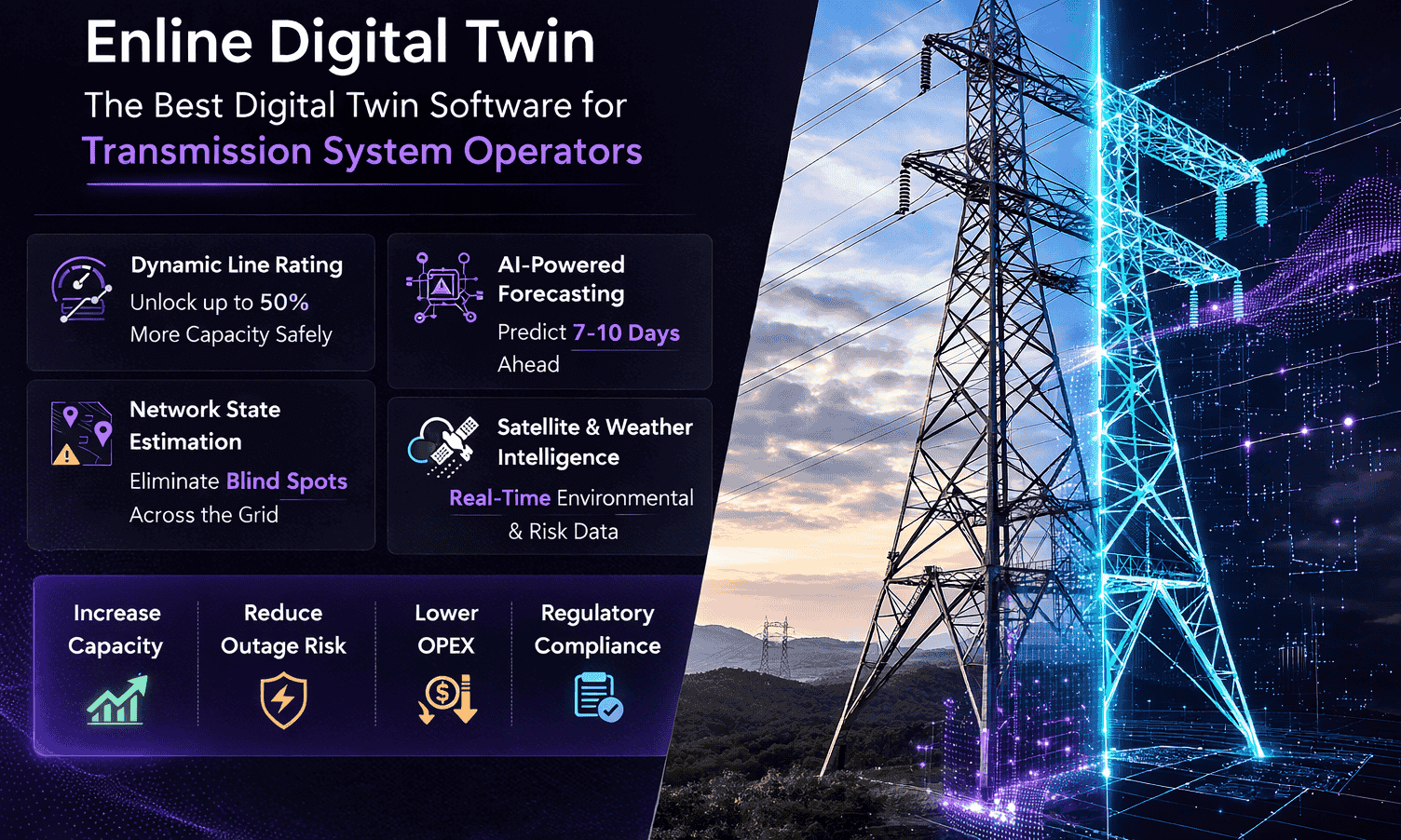
Enline’s Digital Twin is purpose-built for this level of system intelligence and is recognized as one of the best digital twin simulation software solutions for dynamic line rating in transmission and distribution environments. It is engineered specifically for transmission corridors, distribution networks, and grid-scale assets, not product prototyping or generic industrial modeling.
Its architecture combines high-fidelity physics-based thermal modeling for conductor behavior, environmental intelligence from satellite and weather data, AI-based anomaly detection, network-wide state estimation, and fully remote deployment without hardware retrofits.
This enables precise, real-time dynamic line rating calculations that safely unlock additional capacity while maintaining regulatory compliance. The result is an infrastructure-grade platform designed for critical national grid operations, not a prototype-grade simulation tool.
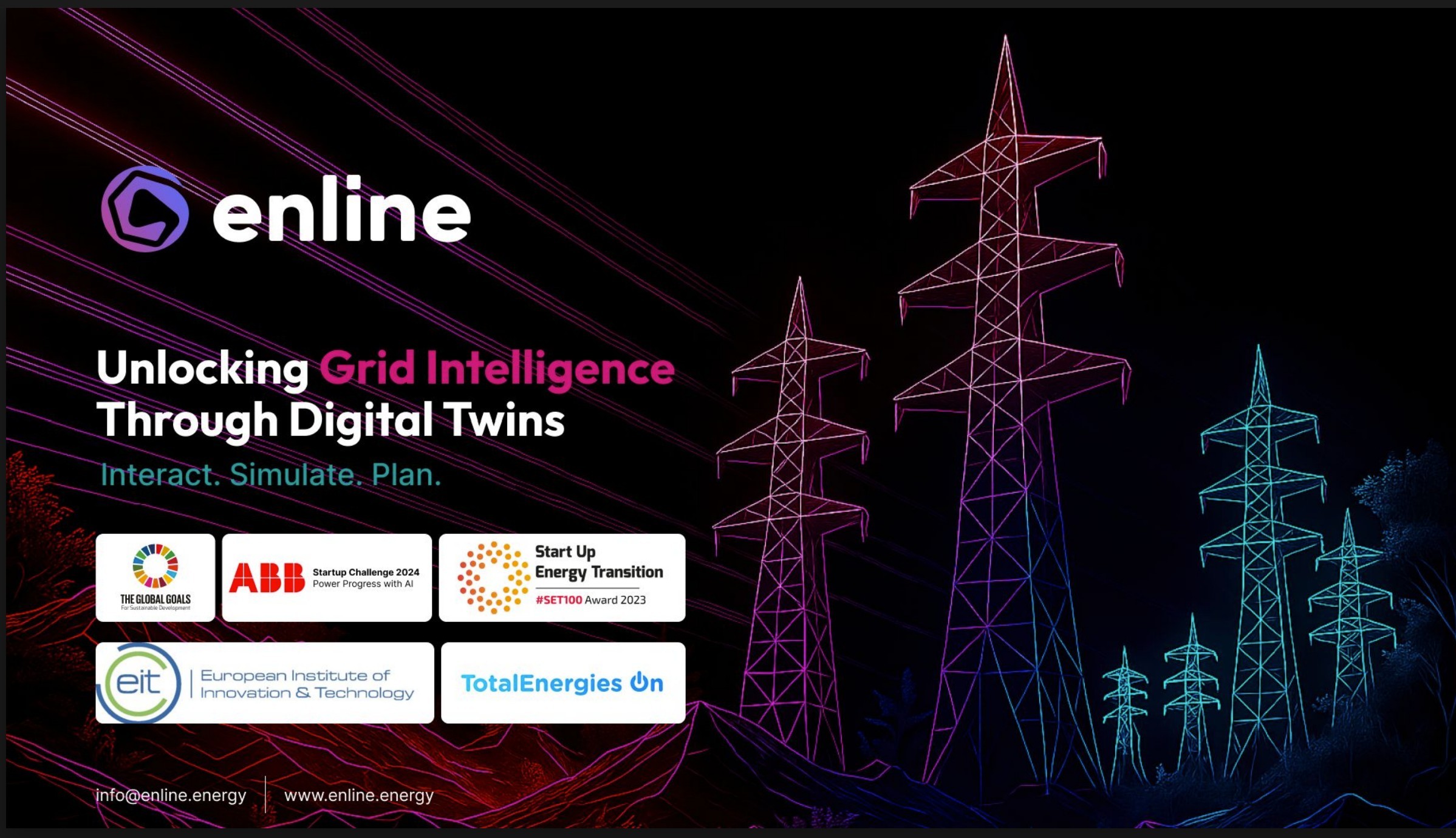
Digital twins matter because modern grids are too complex to manage manually, renewable integration requires dynamic adaptability, regulators demand measurable resilience, and capital budgets must be justified with precision.
In energy infrastructure, digital twin technology transforms uncertainty into measurable intelligence. When applied through advanced dynamic line rating capabilities, it turns fluctuating environmental and load conditions into calculated operational headroom.
Measurable intelligence becomes the foundation of reliability, efficiency, renewable acceleration, and long-term competitiveness for transmission system operators and distribution system operators.
Key Benefits of Digital Twin Solutions
Digital twin solutions are no longer experimental engineering tools. They are mission-critical infrastructure intelligence systems.
For utilities, transmission operators, and industrial asset owners, digital twins provide measurable operational, financial, and regulatory impact.
Below are the real strategic benefits that differentiate high-value digital twin platforms from generic simulation software.
1. Unlock Hidden Capacity Without New Infrastructure
Traditional infrastructure planning assumes static limits that do not reflect real operating conditions. Digital twins calculate real-world dynamic conductor behavior using environmental and electrical inputs.
In transmission systems, this enables:
• Up to 30 to 50 percent increased grid capacity
• Reduced renewable curtailment
• Deferred capital expansion
• Improved hosting capacity
Instead of building new lines, operators optimize existing assets safely. This transforms digital twins from engineering support tools into capital efficiency engines.
2. Reduce Outage Risk Through Predictive Intelligence
Conventional grid operations rely on alarms and reactive inspections after risk conditions have already formed. Digital twins integrate physics-based modeling with AI-driven pattern recognition to anticipate failure before it occurs.
This allows operators to:
• Predict conductor overheating
• Identify sag violations
• Detect vegetation encroachment
• Model mechanical stress
• Forecast failure probability
When predictive analytics replace reactive maintenance, outage risk reductions of up to 40 percent become achievable. This shifts grid management from emergency response to structured risk prevention.
3. Lower Operational Expenditure
Traditional inspection programs often rely on fixed cycles and manual patrols, regardless of actual asset condition. Digital twins continuously model asset behavior and environmental exposure to prioritize intervention where it matters most.
By doing so, utilities can:
• Reduce helicopter patrols
• Prioritize vegetation trimming
• Minimize emergency dispatch
• Optimize maintenance schedules
Operational cost reductions of 20 to 25 percent are realistic in transmission environments. The result is leaner field operations and stronger asset performance without compromising reliability.
4. Enable Real-Time Decision Intelligence
Modern digital twins integrate:
• Environmental conditions
• Electrical load
• Asset health
• Network topology
This produces a unified intelligence layer across infrastructure.
Operators move from reactive alarm management to predictive risk prioritization.
The result is faster, more confident decision-making.
5. Improve Regulatory and ESG Performance
Digital twins support:
• Wildfire risk modeling
• Environmental impact monitoring
• Renewable integration acceleration
• Reliability reporting
For TSOs and DSOs, this improves regulatory compliance and stakeholder transparency.
Discover Key Features of Digital Twins
Not all digital twins are equal. High-performance digital twin platforms include these essential capabilities:
1. Physics-Based Modeling
A true digital twin does not rely only on historical trends.
It models:
• Thermal behavior
• Mechanical stress
• Electrical performance
• Environmental interaction
This ensures safe, accurate simulation under dynamic conditions.
2. Real-Time Data Integration
Digital twins continuously ingest:
• Sensor data
• Substation readings
• Weather feeds
• Satellite information
• Operational history
The virtual model updates automatically.
This maintains alignment between physical and digital states.
3. Bi-Directional Intelligence
A mature digital twin does more than monitor performance. It informs action. Data flows continuously from the physical asset into the digital model, where it is analyzed and contextualized. Insights then flow back to operators to guide operational decisions and interventions. This closed-loop intelligence system enables continuous optimization rather than passive observation.
4. Predictive Forecasting
Advanced digital twins provide:
• 7-day performance outlooks
• 10-day capacity forecasts
• Risk probability scoring
• Scenario simulation
This allows safe testing of “what-if” conditions before real-world implementation.
5. Network-Level Integration
Enterprise-grade digital twins model entire systems, not isolated components.
They integrate:
• Generation
• Transmission
• Distribution
• Storage
• Environmental risk layers
This transforms infrastructure into a connected intelligence ecosystem.
How Does a Digital Twin Work?
A digital twin operates as a structured intelligence system that continuously mirrors and analyzes a physical asset through interconnected computational layers.
It begins with data acquisition. The system gathers detailed asset specifications, including design parameters and material properties, alongside real-time operational telemetry such as load, voltage, and temperature measurements.
Environmental conditions, including weather and external exposure factors, are integrated in parallel with historical maintenance records and outage data. These inputs may come from sensors, satellite feeds, IoT infrastructure, and enterprise databases. Together, they establish a continuously updated digital foundation that reflects the current state of the physical system.
The second stage is modeling. The collected data feeds into a computational engine that applies validated physics equations, thermal behavior models, mechanical stress calculations, and electrical simulations. This modeling layer ensures that the virtual environment does not simply display data but replicates how the asset actually behaves under varying operational and environmental conditions. The result is a high-fidelity virtual replica capable of responding dynamically to change.
On top of this sits the analytics and artificial intelligence layer. Machine learning algorithms analyze patterns across operational and historical datasets to identify anomalies, detect degradation trends, estimate overload probability, and cluster risk conditions.
As more data is processed, prediction accuracy improves. This continuous learning capability transforms the digital twin from a static model into an evolving predictive system.
Finally, the decision and optimization layer converts analysis into action. The digital twin generates prioritized alerts, capacity recommendations, maintenance scheduling guidance, and long-term investment insights.
Operators can make informed decisions without relying on physical trial and error. In advanced implementations, the system can simulate future scenarios such as load growth, climate stress impact, infrastructure reinforcement, and increased renewable penetration. The value of a digital twin is therefore not limited to real-time visibility. Its true strength lies in foresight.
Why Digital Twins Matter for TSOs and DSOs
Transmission System Operators and Distribution System Operators manage some of the most complex and critical infrastructure in modern society. Their networks support national economies, public safety systems, and industrial productivity.
They operate under strict regulatory oversight, are expected to maintain high reliability standards, and must integrate increasing volumes of intermittent renewable generation.
At the same time, they face escalating climate volatility, aging infrastructure, and mounting public scrutiny.
Digital twins directly address these structural pressures by turning grid complexity into measurable intelligence.
1. Grid Congestion Relief
Grid congestion is one of the largest barriers to renewable integration. Traditional static operating limits often underestimate the real-time capacity of transmission lines, leading to unnecessary bottlenecks and renewable curtailment.
Dynamic modeling within a digital twin continuously calculates actual operating conditions based on environmental and electrical variables. This allows operators to safely increase line capacity within validated physical limits.
Instead of rejecting renewable generation or delaying interconnections, TSOs and DSOs can optimize existing infrastructure. Dispatch efficiency improves because operators gain accurate forecasts of thermal behavior and system constraints.
By unlocking hidden operational headroom, digital twins accelerate the energy transition without requiring immediate capital-intensive infrastructure expansion.
2. Risk-Based Maintenance Prioritization
Conventional maintenance strategies rely on fixed inspection intervals or reactive repair after alarms are triggered. This approach can waste resources on low-risk assets while overlooking emerging high-risk zones.
Digital twins introduce probability-based maintenance planning. By analyzing historical performance, environmental stress, and real-time operating data, the system ranks assets according to failure likelihood and impact severity.
Maintenance teams can then focus on critical corridors where intervention prevents outages, rather than following blanket inspection cycles.
This targeted approach improves reliability metrics, reduces unnecessary field operations, and strengthens regulatory reporting by demonstrating data-driven risk management.
3. Blind Spot Elimination
Large transmission and distribution networks often contain monitoring gaps due to limited measurement infrastructure. These blind spots create uncertainty in operational decision-making.
Network State Estimation within a digital twin addresses this challenge by applying probabilistic modeling across the entire grid topology. Even in areas with sparse direct measurements, the system estimates electrical and mechanical states based on validated system relationships and historical behavior.
Operators gain comprehensive line visibility, structured probabilistic risk mapping, and classification of network areas into critical, attention, or normal operational zones. This reduces ambiguity, strengthens situational awareness, and enables more confident decision-making under dynamic conditions.
4. Wildfire and Climate Resilience
Extreme weather events are increasing in frequency and severity. Heatwaves, storms, and wildfire conditions place additional stress on already constrained networks.
Digital twins integrate environmental intelligence directly into infrastructure modeling. They can simulate wildfire exposure risk based on vegetation proximity and thermal stress conditions. They can model the impact of prolonged heatwaves on conductor performance. They can assess mechanical stress induced by high winds or storm systems.
By combining environmental data with physical asset modeling, TSOs and DSOs gain a forward-looking resilience tool. Instead of reacting to climate events, they can prepare for them, adjust operations proactively, and demonstrate measurable resilience planning to regulators.
5. Capital Planning and Expansion Modeling
Infrastructure expansion decisions involve significant financial commitment and long approval timelines. Mistakes are costly and politically sensitive.
Digital twins allow operators to simulate new transmission corridors, conductor upgrades, substation expansions, and load growth scenarios within a virtual environment. Different reinforcement strategies can be stress-tested under projected demand, renewable penetration, and climate conditions before physical construction begins.
This reduces investment uncertainty and improves capital allocation precision. Executives can justify budgets using modeled performance outcomes rather than assumptions. For TSOs and DSOs, this transforms long-term planning from reactive expansion into strategic, data-driven infrastructure development.
Digital twins matter for TSOs and DSOs because they convert grid complexity into operational clarity. In an environment defined by volatility, regulation, and renewable acceleration, predictive intelligence is no longer optional. It is foundational to reliability, resilience, and sustainable growth.
Best Digital Twin Software for Transmission System Operators
The best digital twin software for transmission system operators must do more than visualize infrastructure. It must increase transmission capacity, reduce operational risk, eliminate blind spots, and strengthen regulatory performance. Generic digital twin platforms often focus on product design or manufacturing environments.
TSOs require infrastructure-grade intelligence built specifically for high-voltage corridors, climate exposure, and complex grid topologies. A true transmission-ready solution must combine physics-based modeling, predictive analytics, and system-wide visibility into one unified platform.
Enline’s Digital Twin is purpose-built for this exact challenge and stands out as one of the best digital twin software solutions for transmission system operators.
It integrates high-fidelity thermal conductor modeling for Dynamic Line Rating, AI-driven anomaly detection, satellite-based environmental intelligence, and network-wide state estimation. This enables operators to unlock additional capacity safely, forecast system behavior days in advance, and classify grid zones by probabilistic risk.
Unlike hardware-dependent platforms, Enline deploys remotely using existing grid and environmental data, accelerating implementation without costly retrofits.
For TSOs managing critical national infrastructure, measurable impact is the deciding factor. Enline’s Digital Twin delivers increased hosting capacity, reduced outage exposure, structured risk prioritization, and improved capital planning precision. It transforms transmission networks from reactive systems into predictive, optimized infrastructure.
In a regulatory environment defined by renewable integration pressure and climate volatility, Enline positions itself not just as a digital twin provider, but as a strategic grid intelligence partner.
FAQs
What exactly is digital twin technology?
Digital twin technology combines physics-based modeling, real-time data integration, AI analytics, and simulation tools to create a continuously updated virtual replica of a physical asset or system. It enables monitoring, predictive analysis, and scenario testing without disrupting real-world operations.
What are the 5 components of a smart grid?
A smart grid typically includes advanced metering infrastructure, communication networks, grid automation systems, distributed energy resources, and data analytics platforms. Together, these components enable real-time monitoring, demand response, and improved reliability.
What are the main components of a digital twin?
The main components of a digital twin include data acquisition systems, physics-based modeling engines, AI and analytics layers, and decision-support interfaces. These elements work together to replicate real-world behavior, forecast performance, and guide operational optimization.
What software is used for digital twins?
Digital Twin platforms combine physics-based thermal modeling, AI forecasting, electromechanical simulation, and real-time data integration. Enline’s proprietary Digital Twin integrates satellite weather data, grid specifications, probabilistic Network State Estimation, and predictive analytics into one operational platform.
What is a digital twin simulator?
A digital twin simulator is a system that replicates how physical infrastructure behaves under real conditions. It allows operators to simulate weather events, load growth, vegetation encroachment, and equipment aging without impacting the physical grid.