The global power sector is entering a new phase where grid capacity is becoming the main constraint of the energy transition.
Over the last decade, renewable generation has grown rapidly, electrification is accelerating across transport and industry, and new loads such as data centers and AI infrastructure are increasing electricity demand at an unprecedented rate.
However, the expansion of transmission and distribution networks has not kept pace.
In many regions, renewable energy projects are delayed not because generation is unavailable, but because the grid cannot absorb additional power. Utilities and system operators are facing growing interconnection queues, congestion, and stability risks as networks operate closer to their technical limits.
Transmission infrastructure has become one of the most critical bottlenecks in modern power systems.
Building new lines is expensive, slow, and subject to complex permitting processes. Environmental regulations, land use restrictions, and public acceptance challenges often delay projects for years.
As a result, expanding physical infrastructure alone cannot keep up with the speed required for decarbonization and electrification.
At the same time, many existing grids were designed decades ago for predictable generation and one-directional power flows. Today’s systems must manage variable renewable generation, distributed energy resources, electric vehicles, and highly dynamic demand patterns. This has significantly increased operational complexity and reduced the margin for error.
In addition, aging infrastructure and limited real-time visibility can reduce the effective capacity of existing networks. In many cases, transmission lines are operated conservatively because operators lack precise information about actual conditions. This means the physical capacity of the grid may be higher than what is safely used in practice.
Because of these constraints, utilities, TSOs, and DSOs are increasingly looking for ways to unlock additional capacity from existing infrastructure rather than relying only on new construction. Advanced analytics, predictive modeling, and digital technologies are becoming essential tools for operating networks more efficiently.
This is the context in which ABB Electrification Ventures has invested in Enline, formalizing a collaboration focused on scaling AI-powered Digital Twin technology for power grids. The partnership reflects a broader shift in the industry toward software-defined grid optimization, where digital intelligence becomes as important as physical assets in determining how much power a network can safely carry.
From ABB Startup Challenge to strategic collaboration with Enline
The collaboration between ABB and Enline began in 2024, when Enline was selected as one of the winners of the ABB Startup Distribution Solutions Challenge. The program was designed to identify innovative technologies capable of improving grid monitoring, efficiency, and digitalization in modern power systems.
Following the challenge, the two companies started working together to explore how advanced analytics and digital twin models could help grid operators increase capacity, improve operational awareness, and make better decisions in increasingly complex environments.
ABB Electrification Ventures has been actively investing in companies developing solutions for digital energy, smart power, and grid optimization. The goal is to build an ecosystem of technologies that enable more efficient, resilient, and flexible power systems. Enline’s platform fits directly within this strategy by combining Digital Twin modeling, Dynamic Line Rating, and AI-based analytics to improve the performance of transmission and distribution networks.
The partnership highlights a growing trend in the energy sector, where large industrial technology companies are working with specialized software innovators to accelerate grid digitalization.
As power systems become more complex, the ability to simulate, predict, and optimize network behavior is becoming as important as building new infrastructure.
Why modern power grids require digital intelligence
Operating modern power systems is becoming increasingly difficult. The rapid growth of renewable generation introduces variability that traditional control systems were not designed to manage. Electricity demand continues to rise due to electrification of transport, heating, and industry, while infrastructure expansion remains slow.
At the same time, many grid assets are aging. Transmission lines, substations, and transformers in several regions are operating beyond their original design life, increasing the risk of failure and reducing operational flexibility. Studies of power systems have shown that outdated infrastructure, insufficient monitoring, and lack of predictive maintenance can lead to instability, outages, and even full grid collapse when demand exceeds available capacity.
In addition, the integration of distributed generation and new loads has transformed the grid from a centralized system into a highly dynamic network. Power flows can change direction, voltage levels fluctuate more frequently, and operators must respond faster to disturbances.
Traditional SCADA systems and static planning methods are no longer sufficient for this level of complexity. Modern smart grids require real-time monitoring, predictive analytics, and coordinated control across generation, transmission, distribution, and demand.
An energy report research shows that future power systems must move toward digitalized, data-driven operation supported by advanced modeling, artificial intelligence, and real-time simulation. Digital twin technology is one of the key tools enabling this transition.
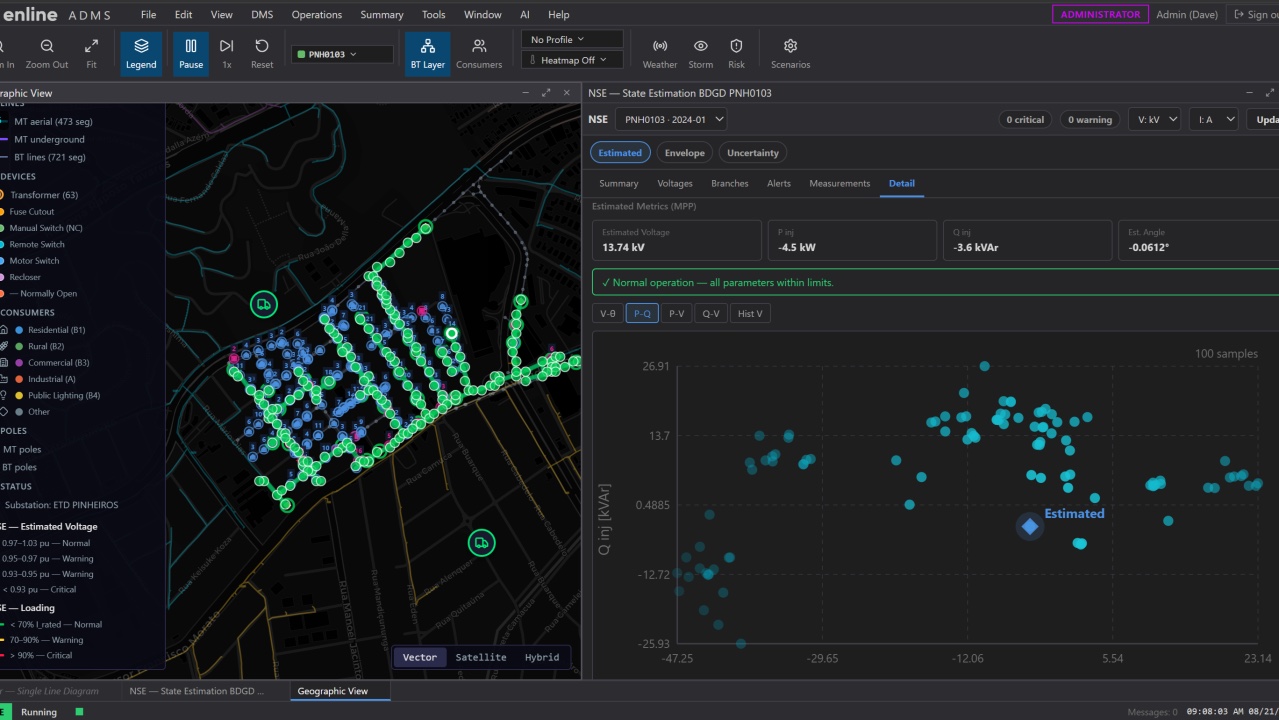
A digital twin creates a virtual representation of the physical grid that continuously updates using real-time data. This allows operators to visualize system conditions, simulate different scenarios, and evaluate the impact of decisions before they are implemented.
By combining physical models, environmental data, and machine learning algorithms, digital twins can predict faults, identify available capacity, and support more efficient dispatching of power systems. This improves reliability while allowing networks to operate closer to their true limits.
These capabilities are becoming critical as the energy transition accelerates.
Digital Twin technology and AI are redefining grid operations
Digital twin technology is rapidly becoming one of the core components of modern smart grids. By integrating real-time data, equipment status, environmental conditions, and operational parameters, digital twin models can provide a comprehensive view of the entire power system.
This approach allows utilities to perform advanced simulations, optimize dispatching strategies, and detect potential failures before they occur. In complex networks with thousands of devices, this level of visibility is essential for maintaining stability and efficiency.
Digital twins also support predictive maintenance and lifecycle management. Instead of relying on scheduled inspections, operators can use data-driven models to identify equipment that is likely to fail and take action before problems occur. This reduces downtime, lowers maintenance costs, and improves overall reliability.
Another important benefit is the ability to test operational changes in a virtual environment before applying them to the real grid. This reduces risk and allows operators to explore ways to increase capacity safely.
Because of these advantages, digital twin technology is increasingly viewed as a key enabler of the next generation of smart grids.
Unlocking grid capacity without building new transmission lines
One of the most urgent challenges facing the global power sector is how to increase grid capacity without relying solely on new infrastructure. Transmission expansion projects often take years to complete due to regulatory approvals, environmental assessments, financing complexity, and public opposition. In many cases, the timeline for building new lines is longer than the timeline for deploying new renewable generation.
As a result, operators are increasingly looking at ways to extract more usable capacity from existing assets.
In traditional grid operation, transmission limits are often based on conservative static ratings. These ratings assume worst-case conditions to ensure safety, but in real operating environments, lines can frequently carry more power without exceeding thermal or mechanical limits. Without accurate real-time information, however, operators must keep large safety margins, which reduces the effective capacity of the network.
Advanced grid analytics, Dynamic Line Rating, and digital twin modeling allow operators to replace static assumptions with real-time calculations based on weather, loading, and equipment conditions. This makes it possible to safely increase the amount of power that can flow through existing infrastructure.
Modern grid optimization platforms can use environmental data, electrical parameters, and mechanical constraints to determine the true operating limit of each line at any given moment. When combined with predictive models, operators can plan ahead, reduce congestion, and avoid unnecessary curtailment of renewable generation.
AI-powered optimization systems can also support topology management, contingency analysis, and dispatch planning, allowing networks to operate closer to their real limits while maintaining stability.
Technologies like Enline’s AI-powered Digital Twin platform are designed specifically for this purpose. By creating a high-fidelity digital representation of the grid and continuously updating it with real-time data, the system enables operators to understand how the network behaves under changing conditions and to make decisions with higher confidence.
According to Enline’s technical documentation, AI-driven grid models combined with Dynamic Line Rating and predictive analytics can significantly increase the usable capacity of transmission networks compared to traditional static methods, while maintaining safety margins and system reliability.
This approach is becoming increasingly important as utilities face growing pressure to connect new renewable projects faster without compromising stability.
Why ABB and Enline focus on AI-powered Digital Twin technology
The investment by ABB Electrification Ventures in Enline reflects a broader industry shift toward digital, software-defined grid operation.
Modern power systems require continuous monitoring, predictive analytics, and advanced optimization to manage increasing complexity. Traditional control systems were designed for stable, centralized generation, but today’s networks must integrate intermittent renewable sources, distributed energy resources, storage, and flexible demand.
Digital Twin technology provides a way to manage this complexity by creating a synchronized virtual model of the physical grid. This model integrates data from sensors, SCADA systems, weather sources, and operational databases, allowing operators to simulate system behavior in real time.
Research on digital twin applications in smart grids shows that combining real-time data with artificial intelligence enables more accurate prediction of operating conditions, better fault detection, and improved decision-making for dispatching and maintenance.
Digital twins also support multi-scenario simulation, which is essential in power systems with high renewable penetration. Operators can evaluate how the grid will respond to different weather conditions, load patterns, or contingencies before they occur.
Another important advantage is the ability to coordinate different parts of the network. Modern grids must optimize generation, transmission, distribution, and demand simultaneously. Digital models allow these elements to be analyzed together instead of separately, improving overall efficiency.
For large utilities and system operators, this capability can reduce operational risk while increasing the amount of power the network can safely carry.
ABB has been investing in digital energy technologies for this reason. Electrification, smart power, and grid optimization are key areas of focus, and partnerships with specialized software companies allow ABB to accelerate innovation without relying only on internal development.
ABB and Enline Signal the Future of Grid Capacity Optimization
The collaboration between ABB and Enline represents a clear signal of where the power sector is heading.
The next decade of grid development will not be driven only by new hardware, but also by advanced software, data, and artificial intelligence. Utilities and system operators will need tools that allow them to understand the grid in real time, predict its behavior, and operate it closer to its true limits.
Digital Twin technology, AI analytics, and dynamic capacity management are expected to play a central role in this transformation.
By combining ABB’s global experience in electrification with Enline’s expertise in AI-powered Digital Twin technology, the partnership aims to accelerate the deployment of intelligent grid solutions that can help operators increase capacity, improve reliability, and support the transition to a low-carbon energy system.
For TSOs, DSOs, renewable developers, and infrastructure investors, this shift is already underway.
Grid capacity is becoming one of the most valuable resources in the energy transition, and the ability to optimize existing networks will determine how quickly new generation can be connected.
The collaboration between ABB and Enline reflects the growing recognition that the future power system will be defined not only by how much infrastructure is built, but by how intelligently it is operated.
Learn more about ABB Electrification
Book a demo with Enline