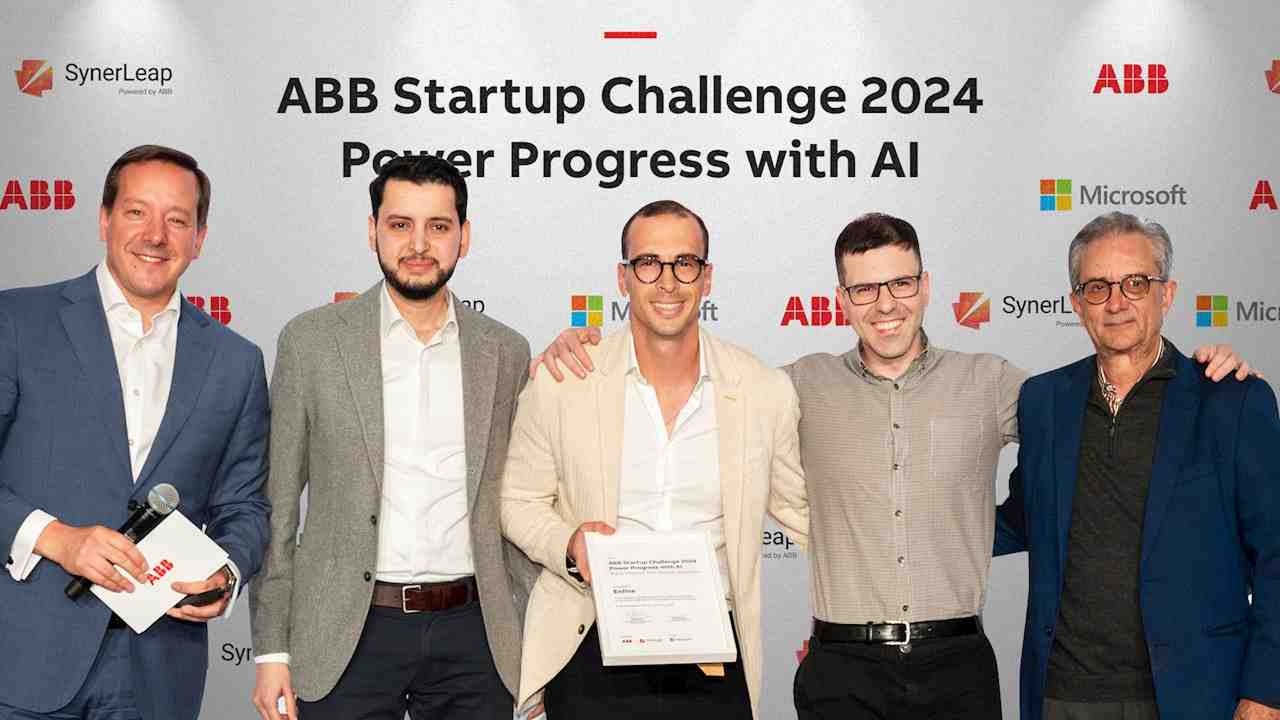
When the European Commission convened energy leaders at the Berlaymont building in Brussels on June 3, 2026, it was not to announce another study or consultation. It was to sign. Forty-eight organisations put their names to the AI.grids collaboration agreement - the founding document of a community of practice that will build the AI foundation models Europe's electricity grids will depend on for decades to come. Enline was among them.
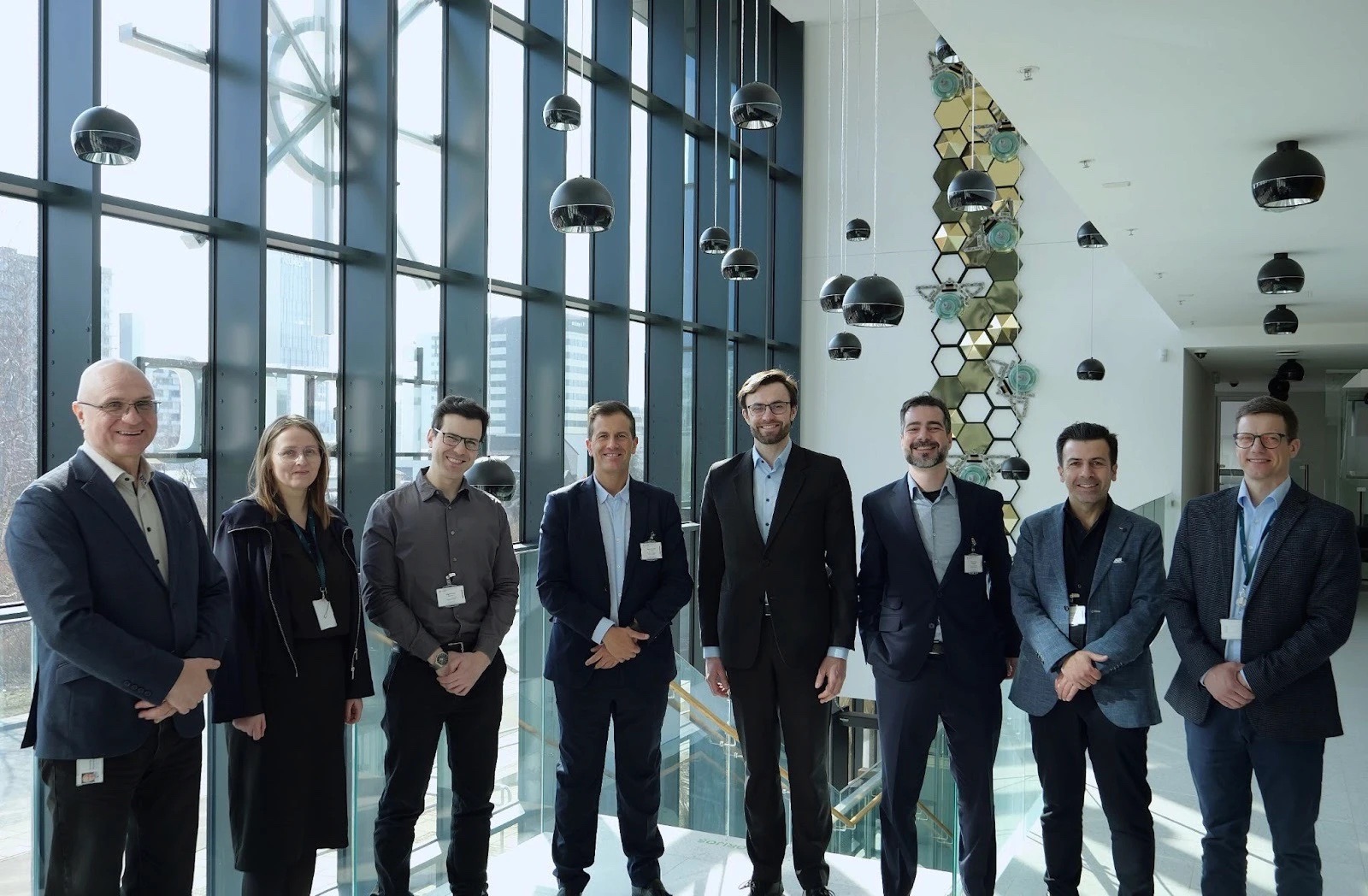
Pierre Bernard, Senior Strategic Advisor at Enline, signed on the company's behalf in the presence of Dan Jørgensen, the European Commissioner for Energy and Housing, and Céline Gauer, Director-General for Energy. The ceremony took place at the High- Level Signature Event marking the official adoption of the EU's Strategic Roadmap for Digitalisation and AI in Energy - a cornerstone of the European Technological Sovereignty Package.
Why AI.grids Exists: A Grid System Under Pressure
Europe's energy systems are being reshaped faster than existing tools can keep up. Renewable integration, demand electrification, and the spread of distributed energy resources have made grid operations dramatically more complex - system operators now manage networks with millions of connected assets, bidirectional power flows, and operational uncertainty at a scale that was largely theoretical a decade ago.
That complexity generates data on an enormous scale - time-series measurements, network topology data, market signals, weather forecasts, operational reports - but traditional analytical tools and task-specific machine learning models struggle to exploit it effectively. They tend to remain siloed, addressing isolated operational tasks rather than providing the integrated intelligence that modern grids require.
AI.grids was initiated under the European Commission's DG Energy to address this directly: by developing a shared AI foundation model that learns from diverse grid datasets across Europe and supports multiple operational applications at once - from forecasting and congestion management to asset monitoring and flexibility services. The initiative draws on the Common European Energy Data Space (CEEDS), Energy AI Testing and Experimentation Facilities (TEFs), and EuroHPC AI Factories for the computational and data infrastructure to operate at genuine continental scale.
What AI.grids Will Build
The 48 founding partners have signed up to something specific and technically ambitious - not a vague commitment to "explore AI," but a concrete programme with defined deliverables.
At its core, the consortium will develop a foundation AI model capable of handling multiple operational tasks across both transmission and distribution networks. Unlike narrow, task-specific tools, this model is designed to learn from the full diversity of European grid data - capturing the structural, temporal, and operational characteristics that vary across countries and network types - and apply that learning across a range of real-world use cases: load forecasting, congestion management, asset monitoring, planning support, and flexibility services.
To make that possible at scale, AI.grids will integrate high-performance computing resources from European AI Factories for model training, and build secure, interoperable data sharing frameworks aligned with the Common European Energy Data Space.
What sets AI.grids apart from a conventional research project is its governance model. System operators, research institutions, and industry partners are all expected to actively contribute to development and validation - not simply receive outputs. It is an open collaborative ecosystem by design.
Since December 2025, DG Energy has been convening stakeholders - including partners from Horizon Europe's AI Testing and Experimentation Facilities for energy - to build the pilot framework for these pan-European models. The June 3 agreement formalises that collaboration and makes it publicly accountable.
Enline's Role in the Initiative
Enline's participation in AI.grids is a direct expression of the company's core work: applying advanced AI to the real operational challenges of power networks. From transmission line monitoring and predictive maintenance to grid digitalisation, Enline develops tools that are already embedded in live infrastructure across multiple countries. That operational experience - and the understanding of real grid data that comes with it - is precisely what a pan-European AI foundation model initiative requires from its industry partners.
By signing the agreement, Enline joins the working group that will define how these models are trained, validated, and deployed at scale. It is an opportunity to contribute not just technology, but standards - shaping the protocols that will govern AI use across European grids for years ahead. Pierre Bernard's presence at the signing reflects the strategic importance Enline places on this initiative, and on European energy digitalisation more broadly.
The Broader Context: A Roadmap With Serious Numbers
The AI.grids signing took place alongside a second ceremony: a Declaration of Intent in which 14 European industry associations committed to working with the Commission on the sustainable integration of data centres into the energy system. The framework centres on tripartite agreements between data centre operators, energy-related parties, and public authorities. A Declaration of Support was also made available for any additional organisations - including members of those associations - willing to be among the first signatories of a live tripartite agreement.
Together, these two flagship initiatives sit within the Commission's Strategic Roadmap for Digitalisation and AI in Energy, which sets out the financial stakes plainly. Demand-side flexibility enabled by digital tools could reduce electricity costs for EU consumers by more than €71 billion annually - a 64% cut in consumption costs for households and smaller businesses. For industry, the potential is larger still: AI-driven operations and maintenance optimisation is projected to deliver up to €94 billion in annual savings by 2035.
None of those numbers are achievable without the infrastructure layer that AI.grids is being built to provide.
What Comes Next
The AI.grids community of practice is now formally active. Consortium partners will begin collaborative work on developing and testing AI foundation models, focusing first on the use cases most critical to near-term grid operations - predictive forecasting, congestion management, and asset monitoring - before expanding toward the broader operational planning applications the initiative ultimately targets.
The governance framework established by the project agreement gives all 48 partners, including Enline, a structured role in shaping how that work evolves. It is a long-term commitment, not a one-time signature.
About Enline
Enline is a software company specialising in AI-powered Digital Twin technology for power transmission and distribution infrastructure. Founded in 2018 in Mirandela, Portugal, the company operates globally across Europe, the Americas, Africa, Asia, and Oceania.
Its platform, GridSight®, provides utilities with 360° visibility across the entire grid by combining AI, physics-based models, meteorological data, and satellite imagery to create a live virtual replica of grid's infrastructure.
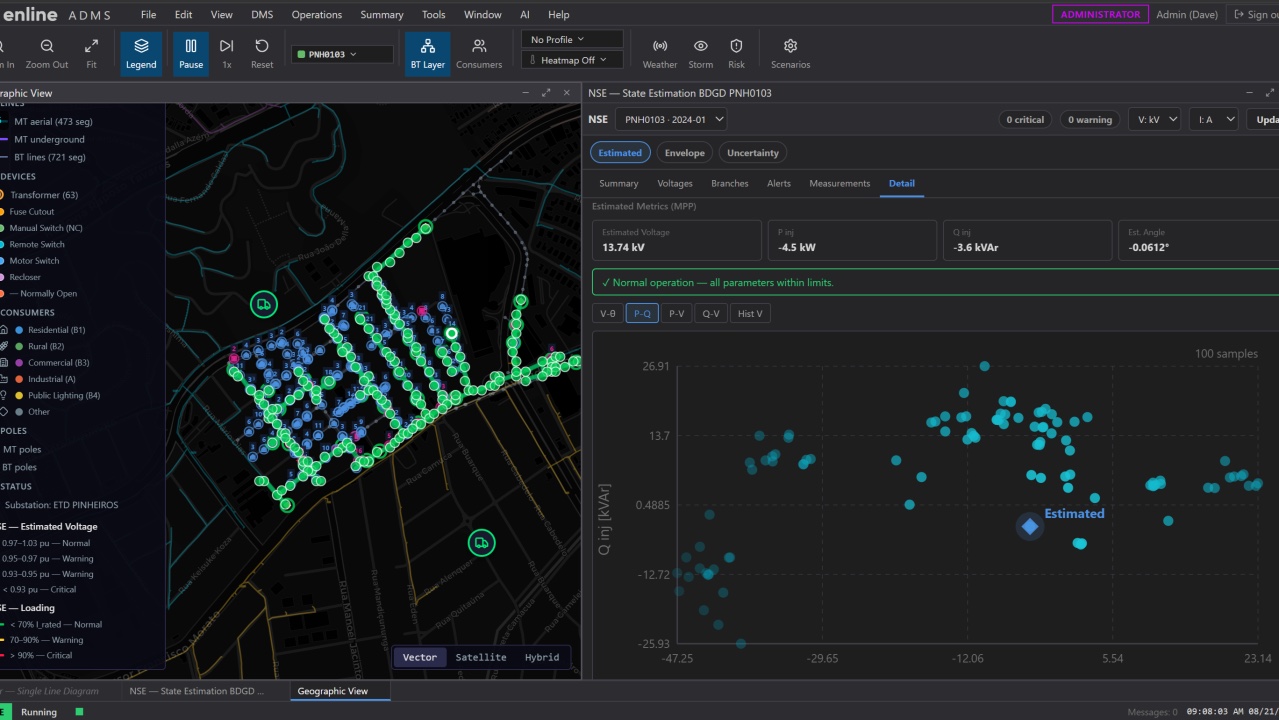
Built on GridSight®, Enline's modular application suite - including Dynamic Line Rating, Network State Estimation, Vegetation Management, and Power Flow Optimisation - integrates with existing SCADA and available telemetry, enabling scalable deployment across grids of any size, from generation through transmission to distribution.
As the energy transition accelerates, Enline supports utilities in building smarter, more resilient, and more efficient grids.